


The Best Bulgarian Dramas Worth Watching
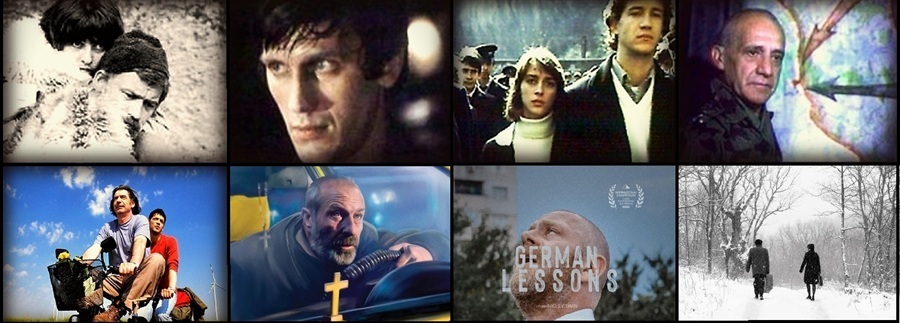
Bulgarian cinema is known for its powerful dramatic stories. These are films that are not simply watched, but experienced — through deep emotion, psychological depth, and unforgettable characters. From the golden classics of the 20th century to modern festival favorites, Bulgarian dramas continue to move audiences with timeless themes of love, loss, moral choice, and the resilience of the human spirit.
Classic Bulgarian Dramas (The Golden Collection)
These titles form the backbone of Bulgarian cinema and continue to captivate generations of viewers decades later.
- The Goat Horn (1972), directed by Metodi Andonov, starring Katya Paskaleva and Anton Gorchev. Considered one of the peaks of Bulgarian cinema. A visually powerful and emotionally devastating story about tragedy, revenge, violence, and impossible love, set against the backdrop of the 17th century.
- Doomed Souls (1975), directed by Valo Radev, starring Jan Englert and Edit Szalay. A magnificent adaptation of the novel by Dimitar Dimov. The film intertwines the tragic and consuming love between English aristocrat Fanny Horn and the Jesuit priest Father Heredia during the Spanish Civil War. Mitko Shterev’s music remains unforgettable.
- Yesterday (1988), directed by Ivan Andonov, starring Hristo Shopov, Georgi Staykov, and Sofia Kuzeva. A symbolic film for an entire generation. A story about growing up, student rebellion against conformity, friendship, betrayal, and first love in an elite boarding school. Its cult lines and the song “Kletva” (“The Oath”) are still remembered today.
Dramas from the Transition Period (The 1990s)
A period of difficult reflection, during which cinema mirrored confusion, harsh realism, and the clash between the individual and a changing system.
- The Canary Season (1993), directed by Evgenii Mihailov, starring Paraskeva Djukelova and Eli Skorcheva. A dramatic story about the fate of a woman crushed by the totalitarian machine. The film explores how the past and political pressure can destroy human lives and dreams.
- The Border (1994), directed by Iliyan Simeonov and Hristian Nochev, starring Petar Popiordanov (Chochо), Nikolai Urumov, and Vasil Vasilev-Zueka. One of the most controversial and brutally honest Bulgarian films of the 1990s. A raw and at times grotesque drama about the absurdity of military life and the moral decay at a remote border outpost.
Modern Bulgarian Dramas (The New Millennium)
Modern Bulgarian cinema has successfully found a new voice, earning recognition at major international film festivals.
- The World Is Big and Salvation Lurks Around the Corner (2008), directed by Stefan Komandarev, starring Miki Manojlović, Carlo Ljubek, and Hristo Mutafchiev. The first Bulgarian film to reach the Academy Awards shortlist for Best Foreign Language Film. A warm and emotional story about memory, roots, emigration, and a life-changing journey on a tandem bicycle.
- Directions (2017), directed by Stefan Komandarev, starring Vasil Banov, Ivan Byrnev, Asen Blatechki, and Irini Jambonas. The film was selected for the prestigious “Un Certain Regard” section at the Cannes Film Festival. Through the stories of several taxi drivers and their passengers during one night in Sofia, the film delivers a raw, tense, and hyper-realistic portrait of modern Bulgarian society.
- German Lessons (2020), directed by Pavel Vesnakov, starring Yulian Vergov (winner of Best Actor at the Cairo Film Festival). A powerful, quiet, and psychologically rich drama about a middle-aged man trying to put the pieces of his life together and say goodbye to his loved ones before emigrating. A film about loneliness, unresolved mistakes, and the need for forgiveness.
What Makes Bulgarian Dramas So Powerful?
- Deep psychological realism: Bulgarian films rarely rely on sugar-coated happy endings. They portray life as it is — complex, sometimes unfair, but authentic.
- Personal stories against the backdrop of history: The personal destinies of the characters are often intertwined with major historical or social changes such as socialism, the transition period, and emigration.
- A strong acting tradition: Bulgarian theater and cinema have produced actors capable of expressing deep inner conflict with minimal means — through a powerful gaze, silence, and raw emotion.
Interesting Facts
- Oscar ambitions: Besides the success of The World Is Big and Salvation Lurks Around the Corner (2008), more recent Bulgarian co-productions and films such as Fear (2020) (directed by Ivaylo Hristov) and January (2021) continue to win awards at prestigious A-category film festivals around the world (Warsaw, San Sebastián, Tallinn).
- Music as a character of its own: In classic Bulgarian dramas, music plays a central role. Composers such as Mitko Shterev (Doomed Souls (1975)), Kiril Marichkov (Yesterday (1988)), and Simeon Pironkov (The Peach Thief (1964)) created themes that took on a life of their own beyond the screen.
- Literary roots: Many of Bulgaria’s strongest dramas are adaptations of classic literary works by authors such as Dimitar Dimov, Dimitar Talev, Emilian Stanev, Nikolai Haitov, and Yordan Radichkov.
Conclusion
Bulgarian dramas showcase the strongest side of our cinema — the ability to tell honest, emotionally stripped-down stories filled with deep humanity. Whether it is a black-and-white classic or a modern digital production, these films never leave us indifferent. They make us think, argue, and most importantly — feel long after the final credits disappear from the screen.